





















Numbers and carriers
Your numbers stay your numbers.
A telephone number is an address your customers know by heart and your competitors cannot copy. There is no reason for it to belong to your software supplier.
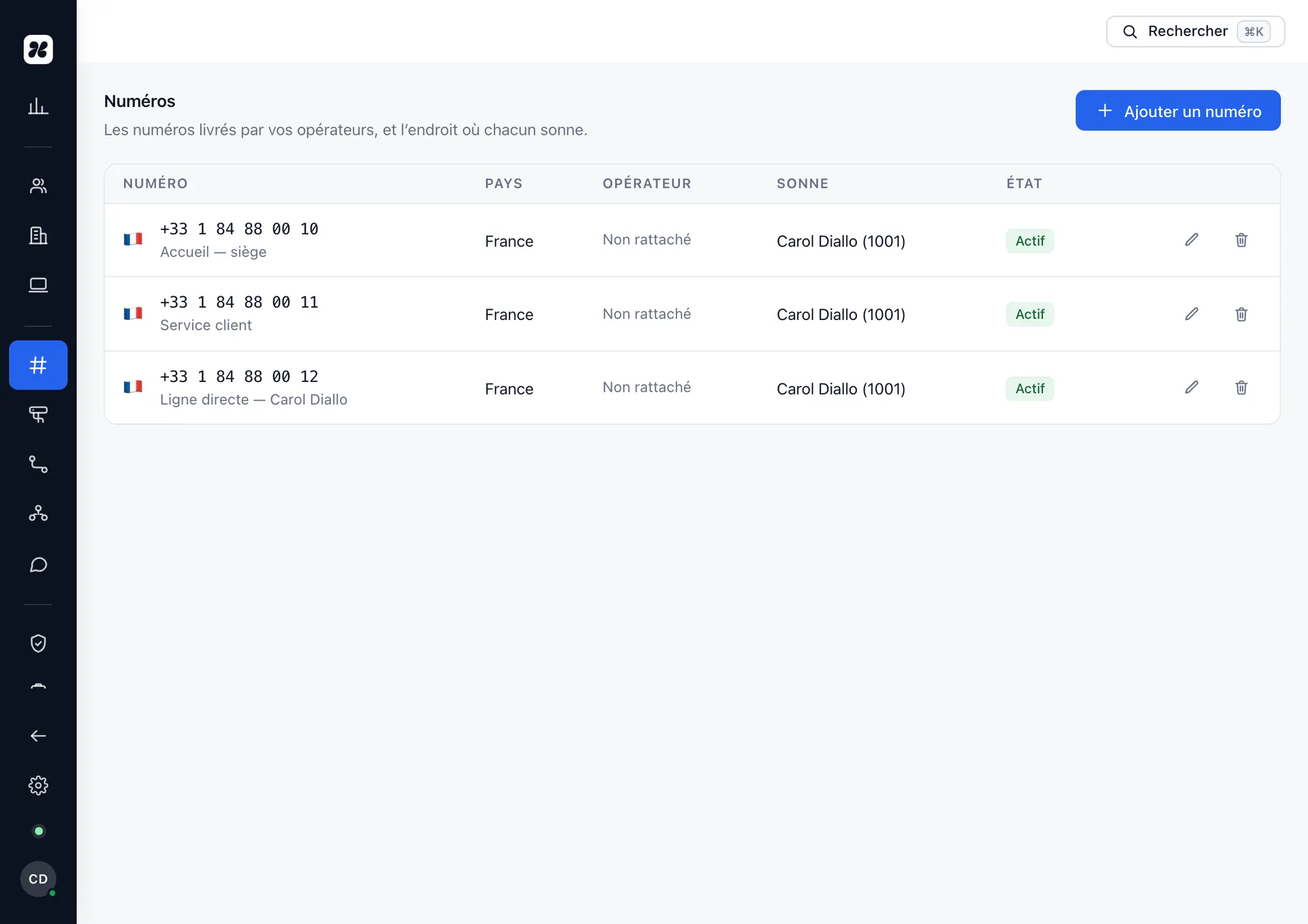
Your numbers, the carrier that delivers them and where they ring, on one screen.
Three ways to connect
You are not obliged to buy anything from us.
It is an uncomfortable commercial choice and a healthy technical one: a platform that cannot live without its own carrier contract is a platform that has you.
Our numbers
You take numbers from us: geographic in more than 60 countries, non-geographic, freephone, mobile depending on the country. Billed per line, cancellable monthly.
Your numbers, ported
We port your existing numbers to our carrier. You keep them, and you can port them away again the day you leave. Outbound porting is never charged for.
Your contracts, kept
You keep your current carrier and we connect its SIP trunk to Konvoice. You change only the platform — no new telecoms bill, no notice period to serve.
Routing
When a carrier goes down, the call takes the other route.
Konvoice never depends on a single carrier. The routing engine picks the route on every call, following rules you can read and change yourself.
- By quality — a carrier whose failure rate climbs is dropped automatically, then retried.
- By destination — calls to Morocco go out via the carrier that delivers them best, calls to Belgium via another.
- By cost — at equal quality, the cheaper route, itemised on your invoice.
- By obligation — some traffic has to stay with a named carrier for regulatory reasons. The rule is explicit and audited.
A call goes out
Konvoice weighs the routes available for that destination, in the order you set.
The first route fails
A 503 from the carrier, or no answer within the allotted time.
Immediate failover
The call goes out on the next route. The caller hears a slightly longer ring, and nothing else.
The failing route is dropped
It is taken out of the selection, probed in the background, and an alert reaches your console.
The connection
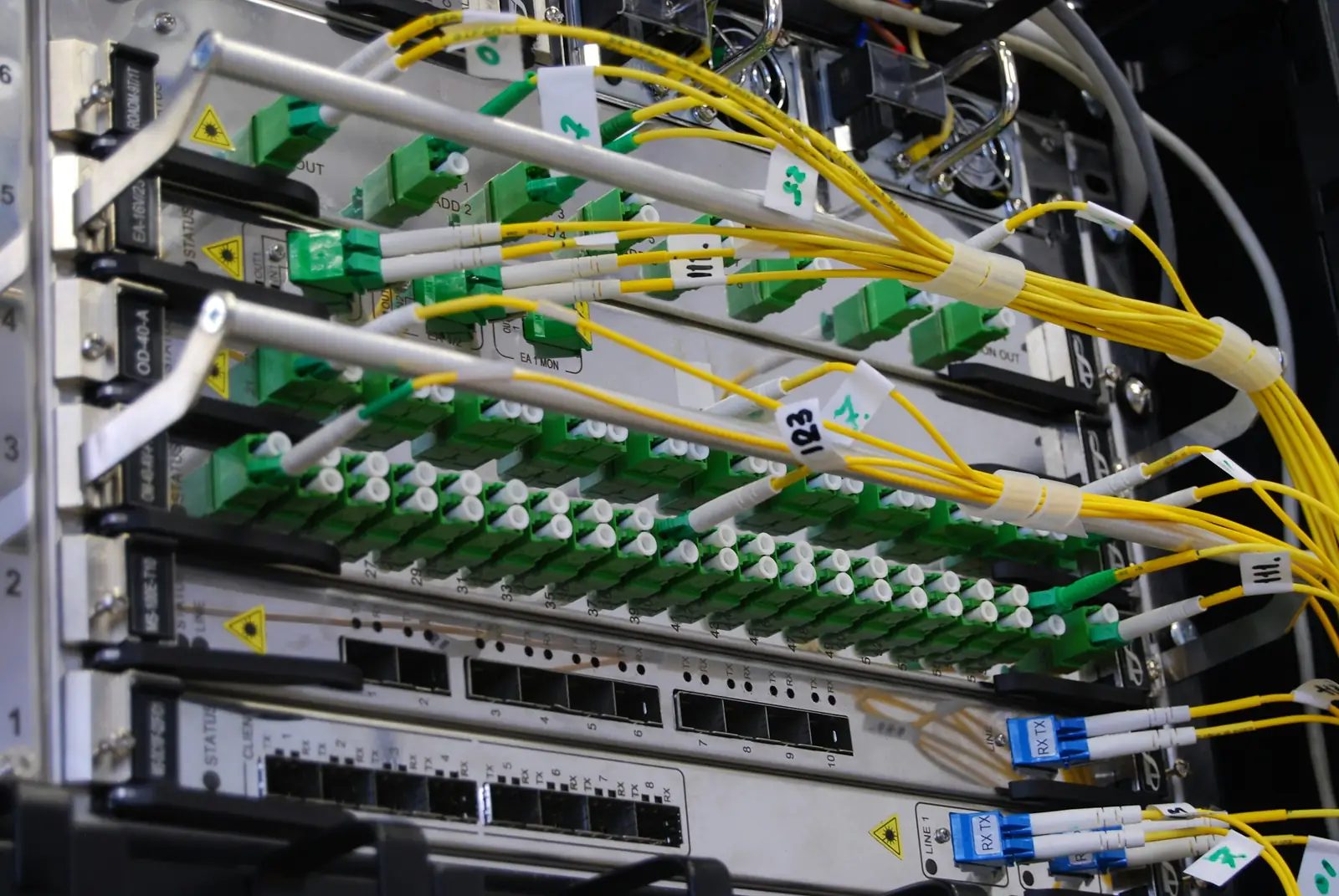
Your numbers should not depend on a single cable.
A number ported to us goes out via two separate carriers, over two separate physical interconnects. That is not a higher-plan option: it is the default configuration, because a single-routed number is not a business number.
- Automatic failover — a carrier that stops answering signalling is dropped within seconds.
- Your own trunks accepted — if you keep your contract, we connect it and it becomes one more route.
- Local emergency exit — on a site with an Edge, an analogue or GSM line remains the last route.
- Free outbound porting — the day you leave, your numbers leave with you, at no charge.
Porting
The real timetable, with no sales optimism.
Porting is the one step of a migration whose pace we do not control: it depends on your current carrier and on your country’s regulator.
| Step | Who acts | Usual time |
|---|---|---|
| Survey of the numbers and eligibility check | Konvoice | 1 to 2 days |
| Porting authority signed | You | Same day |
| Request filed with the receiving carrier | Konvoice | 1 day |
| Processing by the losing carrier | Your current carrier | 10 to 20 working days depending on the country |
| Porting date confirmed | Both carriers | Agreed with you |
| Switchover | Konvoice | A window of a few minutes, outside business hours |
Emergency calls
The subject nobody likes to raise in a sales meeting.
IP telephony has a real weakness: the emergency service has to know where you are. Here is how we handle it, and what you need to know.
Address attached to the site
Each site declares its physical address. An emergency call from a handset on that site presents that address to the emergency services.
Move detection
A handset plugged into a network other than its own site’s is flagged, and the user is asked to confirm their address before they can call outside.
Local backup route
On a site with an Edge and a local line, emergency numbers go out over that line, including during an internet outage.

A number is an address your customers have written down somewhere. Changing it means asking them to correct it.
That is why outbound porting is never charged for
Questions about numbers
Can we keep our incumbent carrier?
Does porting cost anything?
Can we have a number in a country where we have no office?
How many numbers can we attach to one extension?
What about SMS?
See Konvoice on your own numbers.
Thirty minutes, your call plan, your network constraints. We cut the link live and show you what keeps running.
No commitment. No card number asked for.