



















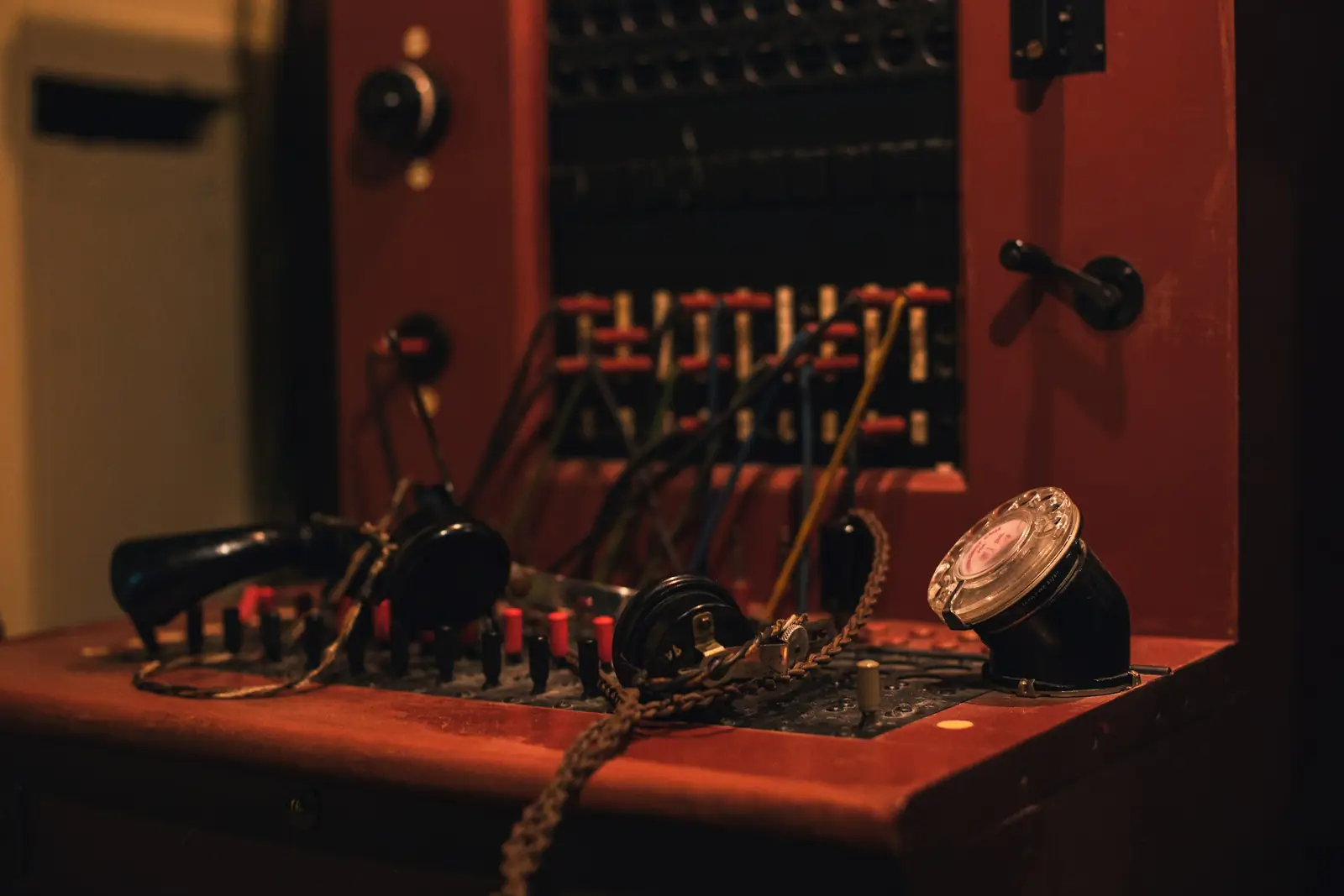
Migration
Your current system is not bad. It is alone.
A well-configured FreePBX does a great many things correctly. What it lacks is an app for your teams, security updates applied without you, and somebody to ring at three in the morning. Migrating should not force you to rebuild everything.
What worries you
The four reasons you keep putting this migration off.
They are legitimate. Here is how each one is dealt with.
“We are going to lose calls on the day”
No, because there is no “the day”. Konvoice runs alongside your system for several weeks. One team switches, then another. Your old system stays reachable throughout, and you can go back at every stage.
“We will have to reconfigure 200 phones”
No. Your handsets are reprovisioned remotely, in batches, overnight. Nobody walks desk to desk. We supply the list of affected models from your inventory, before you sign.
“Our dialling plan is a maze”
We survey it as it is, including the rules nobody understands any more. Then we show you what we understood before reproducing it, which is often the first up-to-date documentation in years.
“We have a carrier contract still running”
Keep it. We connect its SIP trunk to Konvoice. You change platform without changing your telecoms bill, and you can port your numbers later if you want to.
There is no cutover day. There is one team switching, then another.
And a way back at every stage, for as long as both systems are running
The path
Six stages, six weeks, no outage.
The schedule below is for a 150-extension company across three sites. It lengthens with porting and shortens if there are no numbers to port.
Week 1 · Survey
We extract your configuration: extensions, numbers, queues, voice menus, opening hours, diverts, trunks. Two hours with whoever knows the system, and a read of your configuration files. You receive a document describing your current telephony — often more complete than anything you had.
Week 2 · Rebuild
Your plan is rebuilt in Konvoice, on temporary numbers. Nothing is in production. You read it back and correct what we misunderstood.
Week 3 · Pilot
A volunteer team, often the technical team or reception, goes into real production. They use Konvoice all day; the rest of the company sees no change.
Week 4 · Training and fixes
The pilot’s feedback is applied. Your administrators are trained. Your agents get a thirty-minute session.
Week 5 · Porting
The numbers arrive on the agreed date, outside business hours. The switchover window lasts a few minutes per number and your old system stays reachable.
Week 6 · Decommissioning
After a week of stable running, your old system is switched off. We give you its export before it goes, for your archives.

Before you sign
We read your configuration before selling you anything.
The survey covers what exists, including the rules nobody understands any more and the handsets nobody claims. Then we show you what we understood — which is often the first up-to-date documentation of your phone system in years.
- The real handsets — models, firmware, MAC addresses, and the list of the ones that will not follow.
- The plan as it is — extensions, groups, queues, hours, diverts, duplicates included.
- The trunks and their notice periods — so you do not pay twice during the switchover.
- What cannot be carried over — written into the survey, not discovered three weeks later.
Mappings
What each object in your FreePBX becomes.
A direct translation, so that your administrators know where to find what they already know.
| In FreePBX / Asterisk | In Konvoice | Carried over automatically |
|---|---|---|
| Extension | User with an extension and one or more devices | Yes |
| Ring group | Ring group | Yes |
| Queue | Call queue, with skills and priorities | Yes |
| IVR | Voice menu, editable visually | Yes |
| Time condition and time group | Site opening hours and public holidays | Yes |
| Inbound route | Routing rule for the number | Yes |
| Outbound route and trunk | Outbound route and carrier | Yes |
| Voicemail | Voicemail, with transcription if you enable it | Configuration yes, messages on request |
| Custom dialplan | Equivalent Konvoice rule, or a specific study | Analysed case by case |
| Third-party modules | Depends on the module — we tell you which have no equivalent | Analysed case by case |

What the survey most often finds.
Queues pointing at an extension whose owner has left, opening-hours rules written twice and contradicting each other, and billed numbers nobody uses. This is not a testimonial: it is what a dialling plan nobody reads any more contains, and the survey hands it back to you even if you do not sign.
- The survey is free and it is yours, even if you do not sign.
- No planned outage other than the porting window, outside business hours.
- Rollback available right up to the porting itself.
- Your old recordings can be imported and stay readable in the Workspace.
Questions about migration
Can we keep FreePBX on one site and Konvoice on another?
Who does the work?
How much does it cost?
What if we are not migrating from FreePBX?
Will our users have to relearn everything?
Start with the survey. It is free and it is yours.
Two hours with whoever knows your current system, and you receive a document describing your telephony as it is. Whether you sign or not.
No commitment. The document is handed to you even if you choose another supplier.